What's Homeshare?
Homeshare lets you co-own and invest in real property, without needing to buy the whole thing. Each property sits within its own Home Trust, divided into 10,000 equal shares. When you buy shares, you own a genuine, proportional ownership interest in that property and share in its rental income and any change in its value over time.
Whether you’re looking to start small, earn rental income, diversify your portfolio, or enter the property market without massive deposits and mortgages, Homeshare gives you a smarter, modern way to invest. It’s real ownership, made simple, digital and accessible.
Homeshare operates in accordance with New Zealand property and investment law, including the Financial Markets Conduct Act and Real Estate Agents Act (REA) requirements where applicable.

Own Your Share
Each property on Homeshare is divided into 10,000 shares (units) within its own Home Trust.
When you buy shares, you hold a proportional ownership interest in that specific property, earning your share of its rental income and any change in value over time.
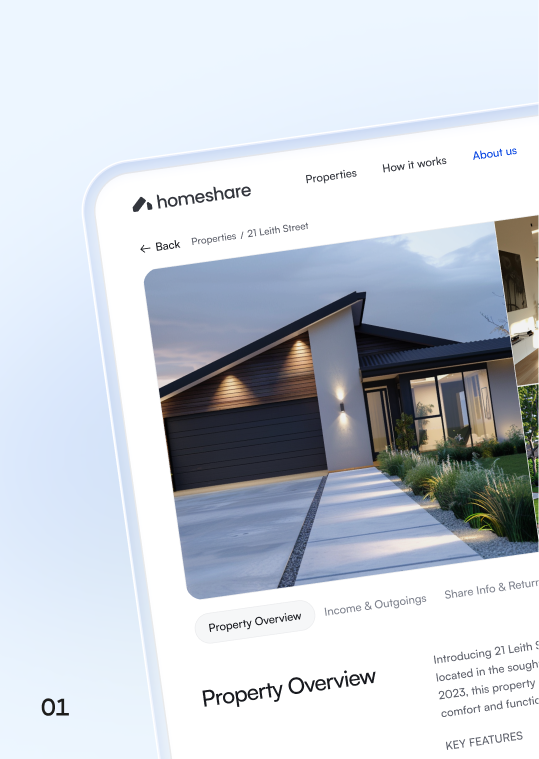
Invest and Trade Anytime
You can invest directly through Homeshare in just a few clicks. Join new listings or buy existing shares from other investors.
There are no transaction fees, no fixed holding periods, and all income and expenses are provided in detail on each property listing.
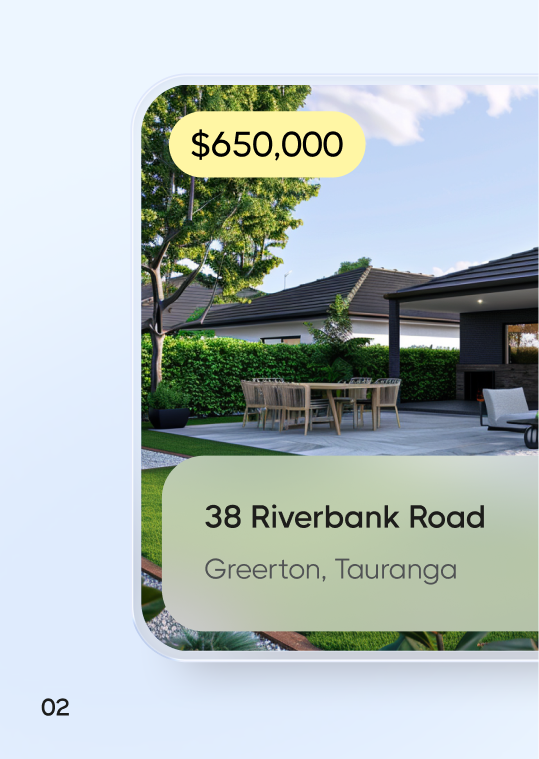
Earn Income Monthly
Each month, your share of net rental income is distributed straight into your Homeshare Wallet for you to withdraw or re-invest at any time.
We handle the rest: rent collection, tenants, maintenance, insurance, compliance, admin, reporting and even tax collection.
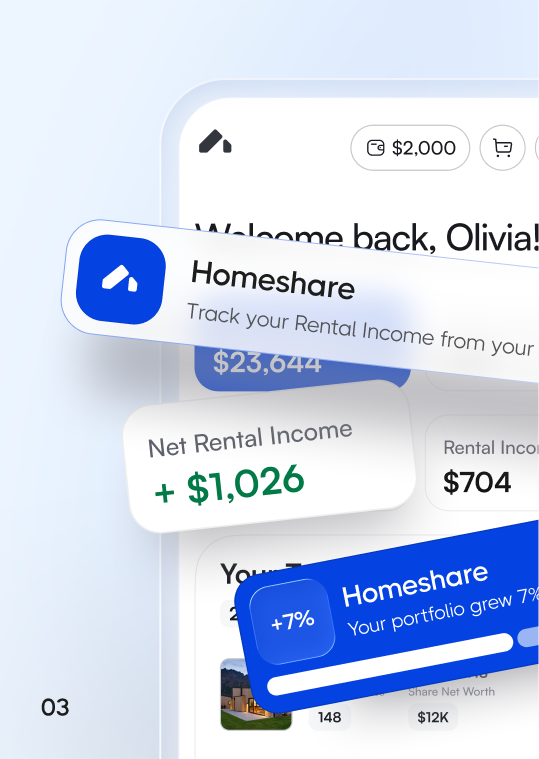
Grow with the Market
As the property's market value moves, so does the value of your shares.
You’re building real exposure to New Zealand property, with flexibility to invest at your level and grow over time, without the barriers of traditional ownership.

Can Property Investing Be Fair & Ethical?
New Zealand faces a serious shortage of quality rental homes. Government and industry reports estimate a housing shortfall of 20,000 – 30,000 homes, with rental demand outpacing supply in nearly every major region. Too few purpose-built rentals are being developed, and many investors compete for existing family homes instead of funding new builds.
That’s the cycle we're aiming to change.
Property investment has too often felt like a zero-sum game, where one person’s gain is at someone else’s expense. At Homeshare, we’re building a model that aligns investor returns with growing the pool of modern, professionally managed and newly built rental homes. We focus on properties designed to be rented long-term, not houses competing with first-home buyers at auction.
By directing investor capital toward new built-to-rent developments, Homeshare helps aligned developers recycle capital faster, bringing more homes to market. Our goal is to make property investment part of the solution, rather than part of the problem.
For us, this is only the beginning. As Homeshare grows, we plan to extend our model beyond residential homes, into commercial, short-stay, and infrastructure property series that support New Zealand’s long-term housing, tourism, and essential-services needs. Each new category will follow the same principles: transparency, regulatory oversight, and sustainable income built on real assets.
Here’s how our current residential model is built to work better for everyone:

More homes funded, not fewer
Each time investors buy shares in a new property, that capital can be recycled into future developments. Over time, this helps unlock more purpose-built rentals for Kiwi families—homes that might not otherwise be funded by banks or traditional investors.

Designed for durability & quality
All homes in our portfolio are chosen for long-term performance. They meet or exceed efficiency standards, are professionally managed, and are built for longevity, meaning healthier homes for tenants and reduced maintenance risk for investors.

Transparent and aligned
We publish rental returns, cost breakdowns, management fees and exit options clearly. Investors hold shares through a regulated trust structure built for stability. Tenants benefit from secure leases and well-maintained homes.
We know New Zealand’s housing challenges won’t be fixed overnight, and no single platform can do it alone. But we believe that when investment capital flows toward new supply that is well looked after, everyone benefits a little more fairly.
How Property Shares Work
Every property on Homeshare moves through two key phases: Pre-Sale and Open Sale.
Pre-Sales = Early access. Secure your stake before shares sell out.
Open Sales = Trade property shares in a flexible marketplace
Pre-Sale
During this phase, investors can subscribe to purchase shares (units) in a newly listed property. Your committed funds are held securely in trust and your shares are reserved, but ownership is only finalised once the property is fully funded.
If a property isn’t fully subscribed within 90 days (and isn’t extended), your funds are automatically refunded in full, including any fees paid, and no shares are issued.
Once a Pre-Sale is complete, the property moves to an Open Sale.
Open Sale
Once a property is fully funded in its Pre-Sale, ownership is recorded to your name in the property’s digital register and reflected in your Homeshare dashboard.
From there, you can buy or sell shares with other investors on our marketplace, giving you flexibility to adjust your holdings, cash out, or increase your stake over time.
Share prices are set individually by each seller, though they must be within 25% of the property's most recent value estimate.
How to Buy Property Shares
Investing with Homeshare is designed to be simple, secure, and transparent. Here’s how it works from start to finish:
Create Your Account
Sign up in minutes with your email and a secure password.
Verify your identity online with an ID to activate your Homeshare account, no paperwork required.
Add Funds to Your Wallet
Easily top up your Homeshare wallet to prepare for your first investment.
Go to Wallet in your account.
Copy your unique bank reference and the Homeshare bank details.
Make a standard bank transfer with the amount you want to top up.
Funds usually appear in your wallet within one business day.
Your funds are protected: All wallet balances are held on bare trust in a seperate, dedicated account with a leading New Zealand-registered bank, completely separate from Homeshare’s operating accounts.
Explore Properties
Browse a curated range of New Zealand properties on the Homeshare marketplace, including residential rental homes and future offerings such as commercial, short-stay, and infrastructure opportunities.
Each listing includes detailed property insights, projected returns, and independent valuations to help you make informed decisions.
Own Your Share
When you find a property that fits your goals:
Choose the number of shares you’d like to buy.
Confirm and complete payment instantly using your wallet.
Your shares are then allocated to your account and recorded in our digital property register.
That’s it. You’re now an owner in the property!
You’ll see your ownership reflected in your Homeshare portfolio, where you can track property performance and future distributions, all in one place.
How Each Property is Managed
At Homeshare, every property is professionally managed to safeguard investors’ interests and support long-term value growth.
We’ve partnered with Ray White Property Management, one of New Zealand’s most trusted and established real-estate brands, to oversee day-to-day operations. Their proven expertise, nationwide reach, and high standards of care ensure each property is managed with the same diligence as if it were their own.
Through our Home Trust structure, Homeshare maintains full oversight, financial transparency, and performance reporting across all managed properties.

Meet our property management partner here: Ray White – OnlineRentals
Tenant Screening
Each tenant is carefully vetted through credit, background, and rental-history checks to reduce vacancy risk and ensure stable, long-term occupancy.
We also ensure each property meets the Healthy Homes 2025 standards for the well-being of all tenants. Find out more about what this means here: Tenancy Services - Healthy Homes
Rent Collection & Distributions
Ray White manages all rent collection and arrears follow-up, while Homeshare handles investor distributions.
Net rental income (after expenses) is automatically credited to your Homeshare wallet each month, giving investors clear visibility and timely access to earnings.
Learn more about how income is distributed here: Earning & Withdrawing Your Income
Maintenance & Repairs
From routine upkeep to urgent repairs, we coordinate with professional service providers to keep the property in excellent condition. Investors receive transparency on major expenses, with any costs first being covered from rental income.
Learn more about how maintenance costs are managed here: Maintenance, Fees & Expenses Explained

Legal & Compliance Management
We handle all regulatory requirements, tenancy laws, and health & safety obligations, ensuring the property remains fully compliant with local legislation. This includes periodic property inspections and lease agreement enforcement.
Homeshare operates in accordance with New Zealand property and investment law, including the Financial Markets Conduct Act and Real Estate Agents Act (REA) requirements where applicable.

Insurance Coverage
Each property is insured with, at minimum, an AA- (Very Strong) rated insurance company against damage and loss of rental income to protect both investors and tenants. Our policies ensure comprehensive coverage, so your investment remains secure, even in unexpected situations.
Learn more about what insurance company strength ratings mean here: MoneyHub - Insurance Company Strength Ratings Guide
Mortgage-Free & Leveraged Options
Homeshare plans to offer two ways to invest: mortgage-free and, in the future, responsibly structured leverage. Both options provide different ways to grow your exposure to property, depending on your goals and risk appetite.
Mortgage-Free Properties
Mortgage-free properties are purchased entirely with investor capital. There is no debt, no interest cost, and no exposure to bank lending. Your returns come directly from rental income and any gains in the property value.
These structures appeal to investors who want predictable returns with lower risk. There is no fear of interest costs rising, no refinancing events, and low risk of needing to top up capital if markets shift. You own your exact share of the home’s equity.
You will always see if a property is mortgage-free before investing, along with a clear breakdown of how this affects your returns.
Why Mortgage-Free First?
Before offering leverage, our goal is to prove real performance with a simple, low-risk foundation. Starting mortgage-free allows us to:
Deliver steady rent income without interest costs
Keep returns predictable and easy to understand
Maintain a clean structure for regulators and investors
Build a strong base for future leveraged products
These early properties help unlock what comes next. The faster they fill, the sooner we can introduce leverage.
Want to get onboard our first properties?
Leveraged Properties (Planned)
Leverage has always been one of the strongest tools in property investment. It lets you control a larger asset with less capital, increasing your exposure to both rental income and long-term growth but also significantly increasing risk. Our goal is to offer it in a way that is simple, transparent, and aligned with investors.
When it launches, every leveraged property will show exactly how the structure works (equity, loan amount, interest rate, exposure multiple, and projected rent coverage) before you invest.
Here's what different leverage levels mean:
Mortgage-Free
Exposure: 1x Investment
Example: $1 = $1 Exposure
Low (30% LVR)
Exposure: 1.4x Investment
Example: $1 = $1.4 Exposure
Medium (50% LVR)
Exposure: 2x Investment
Example: $1 = $2 Exposure
High (80% LVR)
Exposure: 5x Investment
Example: $1 = $5 Exposure
How We’ll Keep It Responsible
Leverage can be powerful, but only when engineered properly. Here’s how we’ll keep it responsible:
Interest-Only Loans
Keeps cashflow predictable with no principal repayments.
Fixed or Capped Interest Rates
Rates reviewed annually with major changes requiring investor approval.
Independent Bank Lending
Debt is secured at the Home Trust level with investors never personally liable for loans.
Full Transparency in Your Dashboard
Every dollar of rent, interest, insurance, rates, and management is visible in real time.
Investor Voting & Oversight
Investors vote on key decisions, including refinancing, rate resets, or a sale of the property.

Additional Information
Leverage increases both potential gains and potential losses. Higher interest rates or falling property values can reduce returns or lead to capital loss. Borrowing is optional and not suitable for all investors.
You should consider your financial position, risk tolerance, and seek professional advice before investing in leveraged property.
Earnings, Distributions & Withdrawals
Earning passive income from your property shares should feel simple and predictable. Here is how rental income is calculated, paid out, and accessed.
How Rental Income is Distributed
Each month, rental income from every property is collected and allocated to investors. Your payout is based on how many shares you hold in each property and the associated costs.
Before income is distributed, standard costs such as property management fees (typically around 7.5% + GST), the Trust Service Fee, and any property-related expenses are deducted. For leveraged properties, interest payments will also be deducted.
Homeshare then pays or sets aside any applicable tax under New Zealand’s Listed Portfolio Investment Entity (Listed PIE) regime, a system that simplifies tax and caps it at a maximum of 28% for most investors. The remaining net income is then deposited directly into your Homeshare wallet, with no further tax obligations for most New Zealand residents.
After all deductions, your share of the net income is deposited into your Homeshare wallet.
Learn more about tax here: How Tax Works on Homeshare
Automatic Monthly Payouts
Your share of the rental income is deposited into your Homeshare wallet each month. You can track earnings in real-time and access detailed reports directly from your dashboard.
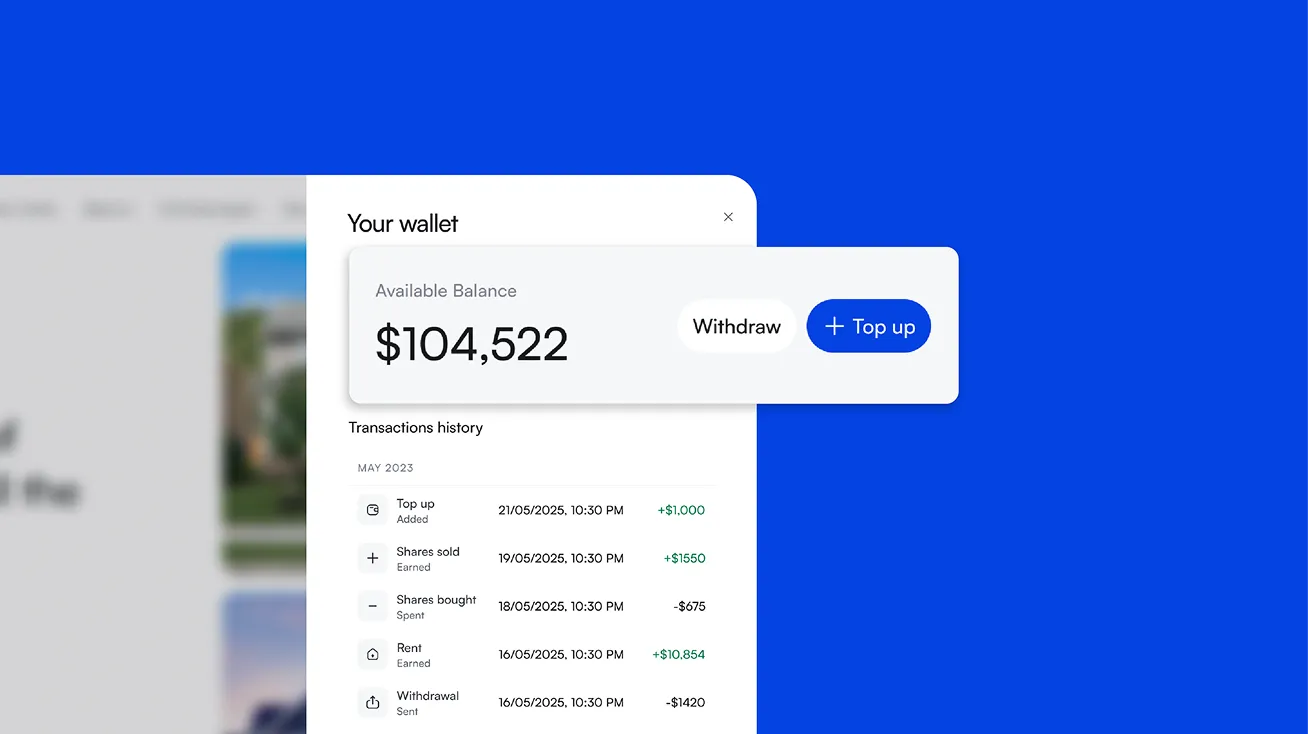
Withdrawing Your Earnings
Withdrawing money from your wallet is fast and straightforward.
Go to Your Wallet
Log in to your Homeshare account and navigate to the wallet section.
Select “Withdraw”
Enter the amount you wish to withdraw and provide your bank details.
Receive Your Funds
We aim to process withdrawals promptly. Funds should typically appear in your bank account within 1-3 business days.
Reinvest & Grow Your Portfolio
You can reinvest your rental income directly into new properties to increase your exposure and compound your returns. There are no extra transfers or delays, so your rental income is ready to reinvest instantly.
Whether you're cashing out or reinvesting, your earnings work for you, on your terms.
Maintenance, Fees & Expenses Explained
Investing in property comes with ongoing costs. Homeshare keeps these simple and transparent so you always understand how each property is managed and how expenses affect returns.
Understanding Maintenance
Maintaining the property is key to stable rental income and long-term value. Maintenance costs (such as routine maintenance, repairs, renovations) incurred will be first covered by rental income, and are shared among investors based on ownership percentage.
While costs can vary, that's simply part of real property ownership—but we keep you informed as these costs arise. Detailed property reports, including LIMs and builders reports, are provided upfront so you know the condition of the property before purchasing.
$1,000
(Repair Costs)
1 share (1/10,000)
(No. of Shares You Own / Total Shares)
$0.10
Your Maintenance Cost
Because Homeshare focuses on new developments to help developers recycle capital faster and bring more properties to market, many common maintenance issues of older properties are significantly less likely to occur, especially in the early years of your investment.
If issues do arise, they’re typically small and easily handled via rental income. In rare cases where larger costs occur, they’re managed through a structured process shared across investors.
This approach helps keep projections clean and easy to compare, while still ensuring each property is maintained to the high standards expected by tenants and investors alike.
Covered by Rent (First and Foremost)
Most routine or unexpected maintenance costs are automatically covered by the monthly rent collected from tenants. This ensures minimal disruption to investor returns.
Smoothed Over Future Rent (If Needed)
If a single month’s rent isn’t enough to cover a larger maintenance cost, the shortfall is typically spread across future rental payments—avoiding the need for immediate investor top-ups.
Investor Contributions (Rare and Proportional)
Only in rare situations where a cost exceeds available rent over a sustained period (typically more than six months) may investors be asked to contribute. This is proportional to the number of shares held.
What Maintenance Includes
Property managers handle all essential repairs and upkeep, including urgent repairs such as plumbing or electrical issues, general upkeep not covered by the tenant, routine servicing of appliances or heating systems.
The actual frequency and cost of maintenance can vary depending on the tenant, location, and specific property features. While exact costs can’t be predicted, investors might expect annual maintenance costs of new builds to fall in the range of 0.5% of the property’s value. This is a general guide, not a guaranteed figure.
How Decisions Are Made
All material maintenance decisions are made by Homeshare or a trusted professional property manager such as Ray White. Decisions follow tenancy law and industry standards to ensure:
Repairs are performed promptly and responsibly
Costs are kept reasonable and competitive
The property remains safe, habitable, and investment-grade
This structure keeps things hands-off for investors while protecting both the value of the home and the satisfaction of tenants.
Property Management Fees
To ensure each property and the families that call it home are well looked after, our properties are professionally taken care of by the experienced property management team at Ray White. Their market-standard fee is deducted from gross rental income and reflects the level of service required based on the property’s age and complexity.
The exact fee for each property is clearly shown on its listing page. To learn more about how properties are managed, check out: How Properties Are Managed
Property management fees cover:
Tenant Sourcing
Advertising vacancies, screening applicants, and securing reliable tenants.
Rent Collection
Collecting rent, managing bonds, and handling lease agreements.
Maintenance and Repairs
Coordinating repairs, maintenance, and property upkeep.
Routine Inspections
Conducting regular inspections and reporting on property condition.
Each property is managed either directly by Homeshare or by a trusted third-party property manager. The management fee is deducted from rental income and reflects the level of service required based on the property’s age and complexity.
Typical management fees for properties under 10 years old are typically upwards of 7.5% + GST, calculated on gross rent.
Trust Service Fee
Homeshare charges no buy or sell fees. A single Trust Service Fee covers everything needed to manage and maintain your investment, from legal, operations, and compliance, to share registry, reporting, and platform costs.
Mortgage-Free Properties
Example: If your share portfolio is worth $1,000, the TSF would be $0.84 per month.
Leveraged Properties
Leveraged properties require a higher level of ongoing admin and management.
Your portion of the Trust Service Fee is automatically deducted from the property’s rental income while you hold your shares. You will never be required to pay the fee separately, and once you sell your shares, the fee stops immediately.
What are leveraged properties? These properties use a mortgage for part of the purchase. This can amplify returns in some market conditions but also increases risk and reduces net rental income due to interest costs. To learn more, check out: Mortgage Free & Leveraged Options
Fee-free until 1st January 2027
As Homeshare is a new product, our goal is to prove the concept first, and not at your expense. As such, Homeshare will cover all Trust Service Fees until 1st January 2027.
Learn more about our fees and costs here: Fees & Costs
Other Potential Costs
Other standard ownership-related expenses may occur, each clearly outlined on every property listing before you invest, such as:
Council Rates & Levies
Charged by the local council to cover services like water, rubbish collection, and infrastructure.
Insurance
Covers the cost of insuring the property and rental income against damage or loss.
Body Corporate Fees
Ongoing fees for shared areas and building maintenance. Applies only to apartments and some townhouses.
Ground Rent
A regular fee paid to the landowner for leasehold properties. Applies to leasehold properties only.
No Hidden Fees
At Homeshare, we believe in complete transparency. All outgoings from property management to maintenance are clearly outlined upfront on each property listing before you invest.
Homeshare does not charge fees for:
Buying Shares
(No fees for buying property shares on the Marketplace)
Selling Shares
(No fees for selling property shares on the Marketplace)
Withdrawing Funds
(No fees for adding funds from your Homeshare Wallet)
Topping Up
(No fees for adding or withdrawing funds from your Homeshare Wallet)
Signing Up
(No fees for creating an account and completing AML verification)
Listing Shares for Sale
(No fees for listing your shares for sale on the Marketplace)
Additional Information
To help you plan your investments, Homeshare provides detailed information about fees and costs in the details section of each property listing. For more details about fees and costs on specific properties, please visit their listings or contact our support team for assistance at support@homeshare.co.nz.
Investors are encouraged to review these details and seek independent investment advice before purchasing shares.
Trading Shares on the Marketplace
Buying Property Shares
Build or diversify your portfolio through the Homeshare Marketplace. All available shares are listed with real pricing, historical performance, and the most current information we have on market conditions.
Here is what you can expect when buying shares:
Direct ownership. You are buying legal units in the property’s trust structure.
Live pricing. Share prices reflect the seller’s ask price and recent marketplace activity.
Transparent data. View estimated share value, property financials, occupancy status, rental returns, and any upcoming expenses before purchasing.
Instant settlement. Once purchased with your wallet balance, shares transfer to your account immediately.
No transaction fees. Buying shares is free. The Trust Service Fee is the only ongoing Homeshare cost while you hold your shares.
Whether you are increasing your stake in properties you already own or adding new homes to your portfolio, marketplace buying is designed to be simple, transparent and fast.
Selling Property Shares
Convert your investment into cash by listing your shares for sale on the marketplace. You control the price and can monitor interest from potential buyers.
Here is how selling works:
Set your own price. List shares at the value you choose based on demand, recent marketplace activity, or current share value estimates.
Full visibility. Buyers see your listing, pricing, and property details, helping them decide with confidence.
No seller fees. Listing and selling shares is free. When a buyer purchases your shares, the full proceeds are transferred instantly to your Homeshare wallet.
Liquidity dependent on demand. Shares sell when a buyer chooses to purchase them. Market activity varies by property, performance, and pricing.
Clear ownership transfer. Once sold, your units are removed from your portfolio and ownership updates automatically in the Home Trust register.
Selling shares is designed to give you flexibility and control without the complexity of selling an entire property.
How Tax Works with Homeshare
When investing in property shares through Homeshare, it’s important to understand how taxes apply to your investments. Homeshare operates each property under New Zealand’s Portfolio Investment Entity (PIE) regime. This structure can offer meaningful tax advantages and simplifies the process for most investors.
Under a multi-rate PIE, tax is calculated using your Prescribed Investor Rate (PIR), which is usually 10.5%, 17.5%, or 28%, based on your personal income. For many New Zealanders, this rate is lower than their ordinary income tax rate, which can lead to real tax savings.
Homeshare, through each unit trust, will pay or set aside applicable PIE tax on taxable income (broadly, rental income minus deductible expenses) before distributions are made to property share owners.For most New Zealand resident individuals, no further tax is required to be paid on PIE distributions, and you generally will not need to include them in your IRD tax return if your PIR is correct.
Learn more about how taxes work under New Zealand's Portfolio Investment Entity (PIE) regime here: IRD - Portfolio Investment Entities
Tax on Income from Your Shares
Each Homeshare Home Trust is intended to elect multi-rate PIE status. You can read more about PIE tax reporting, benefits, and examples here: BNZ - Understanding Portfolio Investment Entities
As a multi-rate PIE, your investment may benefit from the following:

Your PIR Applies (10.5%, 17.5%, or 28%)
Direct rental income is taxed at your normal income tax rate, which for many people is 30%, 33%, or 39%. With a multi-rate PIE, many investors pay from 10.5% up to a maximum of 28%.
Lower Tax Than Direct Ownership
Direct rental income is taxed at your normal income tax rate, which for many people is 30%, 33%, or 39%. Since the PIE tax rate can act as a final tax, many investors may pay less tax compared to owning property directly.
Tax Savings Example
Let’s say you own shares in multiple properties, and your share of net rental income (after expenses) is $50,000.
Under the PIE regime (28% tax rate): Tax on that income may be capped at $14,000, and the remaining $36,000 would be distributed to you.
If you owned the properties directly and were taxed at 39%: Your tax bill could be $19,500, leaving you with only $30,500 after tax.
That's an extra $5,500 in your pocket simply by investing through a Listed PIE structure.
Do I Need to Report My Earnings to the IRD?
If you are a New Zealand resident individual and your PIR is correct, you generally do not need to include PIE income in your tax return.
If your personal tax rate is below 28%, you can choose to include the income on your tax return to claim imputation credits.
In the chance that the unit trust loses its listed PIE status, it may instead be taxed as a company, affecting how tax applies to your investment.
Capital Gains & Bright-Line Rules
No Capital Gains Tax
New Zealand does not generally have a capital gains tax, which means gains from selling your shares are typically not taxed.
Learn more about how capital gains tax works here: MoneyHub - Capital Gains Tax in New Zealand
No Bright-Line Test
Buying and selling shares on Homeshare is not subject to the Bright-Line Test. This is because you’re trading units in a trust, not directly buying or selling residential land.
Tax May Apply If:
You acquired shares with a dominant purpose of resale, rather than hold them as an investment.
You are in the business of trading shares, or are operating a deliberate profit-making scheme involving repeated buying and selling.
Important Disclaimer
The above information provides a general overview of tax implications based on New Zealand tax laws. Tax treatment varies depending on your personal circumstances.
Homeshare does not guarantee the unit trust will forever maintain the listed PIE status. In the event that a unit trust ceases to have a listed PIE status, that unit trust may be taxed as a company at 28%.
We strongly recommend seeking independent tax advice to ensure you fully understand your tax obligations.
Ready To Get Started?
Homeshare gives you flexible, accessible ownership in real property. Whether you are taking your first step or building on years of experience, the platform gives you simple tools to grow a portfolio that fits your goals.


Start Small or Scale Up
Buy as little as 1 share and build at your own pace. Test the waters or steadily increase your position across multiple properties. You choose how far you go.
Diversify with Ease
Spread your investment across different homes, regions and property types. Diversification helps balance risk and gives your portfolio room to perform.

No Lock-In Periods
You are never tied down. Buy and sell shares when it suits you through our marketplace. No long-term contracts. No fixed terms.

Reinvest and Grow Your Wealth
Put your rental income or sale proceeds straight into new opportunities. Compounding becomes simple when reinvestment is only a click away.